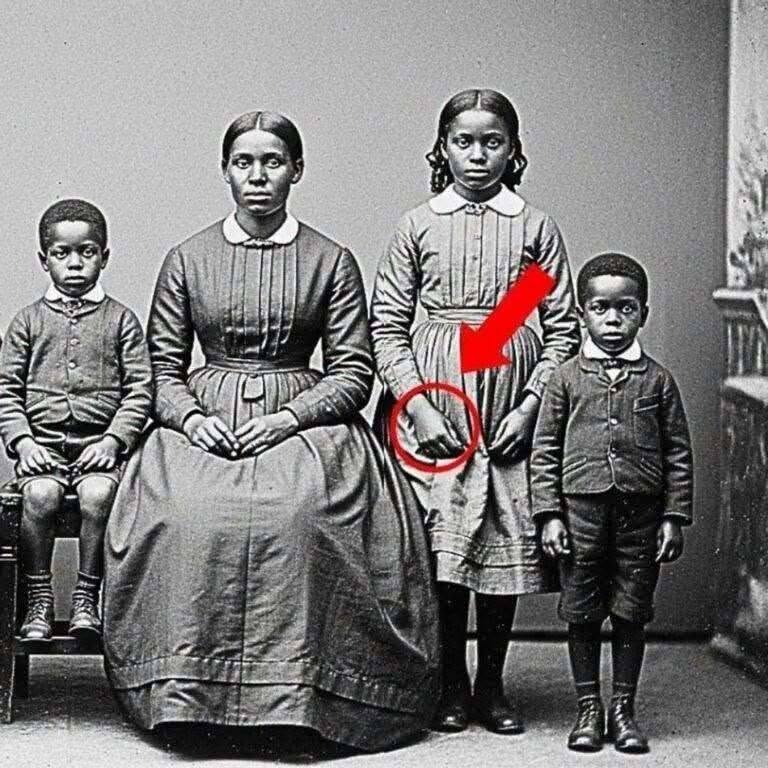
could also create blurred or doubled shapes. Because hands have such a recognizable outline, even an incomplete shape can appear surprisingly convincing.
Clothing and shadows may also contribute to the illusion. Victorian sleeves, folds of fabric, and closely positioned arms can merge together in ways that look anatomically impossible. Once someone identifies the shape as an “extra hand,” the brain naturally begins interpreting ambiguous shadows and highlights according to that suggestion.
This phenomenon is known as pareidolia—the tendency to recognize familiar patterns in unclear visual information. It is the same